Why Light Colored Clothes Make Foster Kitten Health Checks Easier
Quick Answer: Light, plain fabrics make it far easier to spot flea dirt, discharge, blood, and diarrhoea — the four things you are checking for every single day with a young litter. Dark clothes hide fur, but they also hide exactly the evidence that tells you a kitten is deteriorating. For handling and feeding, wear light plain colours in a washable, tightly woven fabric; save the dark clothes for socialising healthy older kittens.
The standard advice is dark clothes, because fur.
But fur is a laundry problem. What you are actually monitoring for is much harder to see, and much more urgent.
Here is the case for switching the default.
What are you actually looking for during handling?
Four things, and three of them are nearly invisible against black fabric.
Flea dirt. Tiny dark specks that turn reddish-brown when wet. Against a dark sleeve they are indistinguishable from fabric texture. Against a light one they are immediately obvious, and in a young kitten flea burden can cause life-threatening anaemia within days.
Discharge. Eye and nose discharge in an upper respiratory infection is often clear or faintly coloured early on, and the colour change is the thing that tells you it is progressing. A pale sleeve is effectively a diagnostic surface.
Blood. Small amounts from an umbilical stump, a scratch, or in stool. On dark fabric fresh blood reads as a wet patch and dried blood disappears entirely.
Stool consistency and colour. With bottle babies and newly weaned kittens, stool is one of the primary health indicators. Accidents on your clothing are unwelcome but also informative, and colour matters — pale, yellow, green and bloody all mean different things.
Weight loss is the fifth thing, and clothing will not help with it. Daily weighing on a kitchen scale remains non-negotiable regardless of what you are wearing.
None of this replaces a vet. These are early-warning observations. Fading kittens deteriorate fast, and the point of noticing early is to get professional care sooner. This is general information, not veterinary advice.
What fabric and cut actually work?
Light colour is the priority, but a few other choices make a real difference.
Tightly woven cotton or a cotton blend. Loose knits and loops catch claws, and a needle claw pulled through a loop rips both the top and, occasionally, the claw.
Long sleeves you can push up. Full sleeve coverage protects your forearms from scratches during medication and nail trims, but you need them out of the way for bottle feeding.
No buttons, drawstrings or zips at the front. Kittens investigate everything with their mouths. Drawstrings are a genuine choking risk and buttons come off.
Hot wash tolerant. Anything you wear with a litter needs to survive 60°C washing. Ringworm and parasites are real considerations in foster work, and a top that shrinks or fades at high temperature will be replaced within a month.
Fitted rather than loose at the waist. Kittens climb. A loose hem is a ladder, and a climbing kitten hanging from fabric can injure itself.
Leggings rather than jeans for floor time. You spend a lot of foster hours sitting cross-legged on the floor. Stretch matters more than you expect, and a light heather grey shows what you need it to.
Keep one dedicated set per litter. Changing between litters, and washing between rooms, is basic biosecurity when you have more than one group in the house.

What Nobody Tells You About Foster Room Clothing
The advice online is written by people thinking about looking presentable, not about doing the job.
You will change more often than you plan for. Two to three changes a day during a bad week is normal with a sick litter. Owning six cheap light tops beats owning two nice ones.
Your sleeves become the towel. No matter how many actual towels you have staged, in the moment you will use your forearm. Plan the fabric accordingly.
Light colours make bathing easier too. When you are checking whether you have rinsed all the flea shampoo from a tiny kitten, being able to see the water running off your own sleeve genuinely helps.
White is a step too far. Pure white shows everything, including things that do not matter, and stains permanently. Light grey, oatmeal, pale sage and soft blue are the practical range.
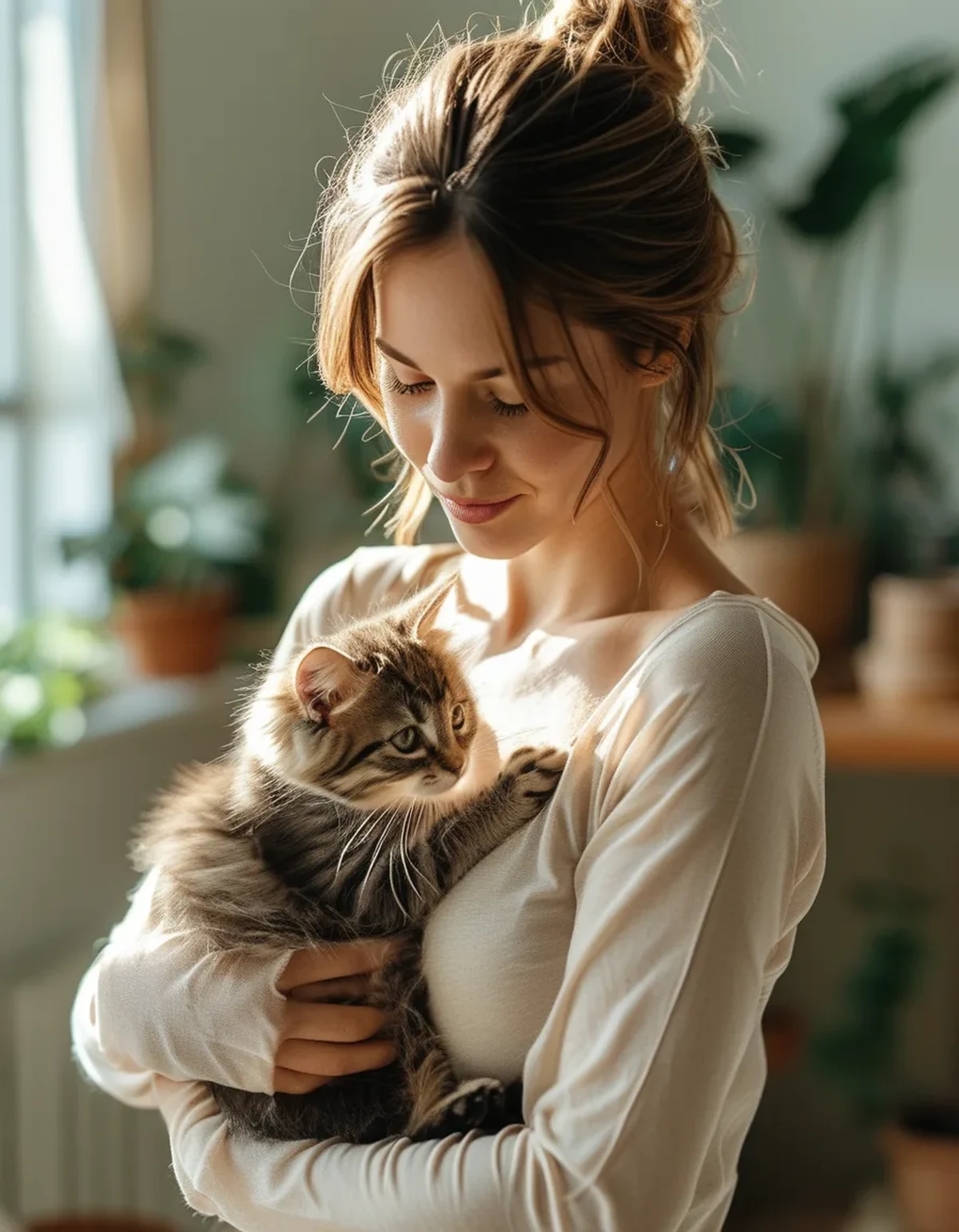
Fur on light fabric is less visible than you think. Most kitten fur is pale, and against a light heather grey it disappears far more than against navy. The dark-clothes advice is often simply wrong even on its own terms.
Autumn brings a specific problem. As you start layering for cooler foster rooms, fleece and sherpa arrive — and both are claw magnets and fur magnets. A smooth light base layer under an open fleece you can remove for handling solves it.
Keep your phone in a pocket you can reach one-handed. You will need to photograph something for the rescue coordinator while holding a kitten. This has nothing to do with colour and everything to do with getting the job done.
Myth vs Fact: What to Wear With a Foster Litter
Myth: Dark clothes are the obvious choice because of fur. Fact: Most kitten fur is light. Dark fabric hides the health signs and often shows the fur more.
Myth: You need special protective clothing. Fact: For most healthy litters you need washable, light, claw-resistant everyday clothes. Reserve gowns and gloves for known contagious cases as your rescue directs.
Myth: Fleece is the cosiest choice for a cold foster room. Fact: Fleece pills, catches claws and holds fur in a way that survives washing badly. Wear it as a removable layer, not against the kittens.
Myth: If it looks clean it is clean. Fact: Between litters, visual cleanliness is not the standard. Hot wash regardless.
Myth: Scratches are just part of it. Fact: Many are avoidable with sleeve coverage and correct handling. Any scratch that becomes red, swollen or painful needs medical attention rather than tolerance.
FAQ: Foster Kitten Clothing Questions, Answered
What colour is genuinely best?
Light heather grey or oatmeal. Pale enough to show flea dirt and discharge, forgiving enough not to stain permanently.
How hot should I wash?
Follow your rescue’s protocol. Sixty degrees is a common standard for foster laundry, which is why fabric choice matters.
Do I need separate clothes for each litter?
If you have more than one group in the house, yes — separate sets and changing between rooms is standard biosecurity.
What about my shoes?
Dedicated indoor shoes or socks for the foster room, left at the door. Shoes track more between rooms than clothing does.
Are aprons useful?
A light washable apron over your clothes works well for bottle feeding rounds and saves a lot of changes.
How do I get stains out?
Cold water first for anything protein-based, then a hot wash. Hot water first sets the stain permanently.
TL;DR:
- Light plain fabrics make flea dirt, discharge, blood and stool changes visible — the four things you monitor daily.
- Choose tightly woven cotton, pushable long sleeves, no drawstrings, hot-wash tolerant.
- Light heather grey beats white and beats black for this job.
- Keep a dedicated set per litter and change between rooms.
- Fleece is an outer layer, never a handling layer.
The clothes are a monitoring tool. Dress for the health check, not for the fur.
Keep Reading
This article is for general informational and styling purposes only. Fit, sizing, and product availability may vary.