What to Wear for Foster Room Shifts Once the Heating Goes On
Quick Answer: Foster rooms stay warm through autumn and winter because young kittens cannot regulate their own temperature, so you are working in a room several degrees above the rest of the house. Dress for that room specifically — a breathable base layer you can work in for two hours, a removable outer layer for the corridor, and fabrics that survive claws and a hot wash.
Dress for the room, not for the weather outside it.

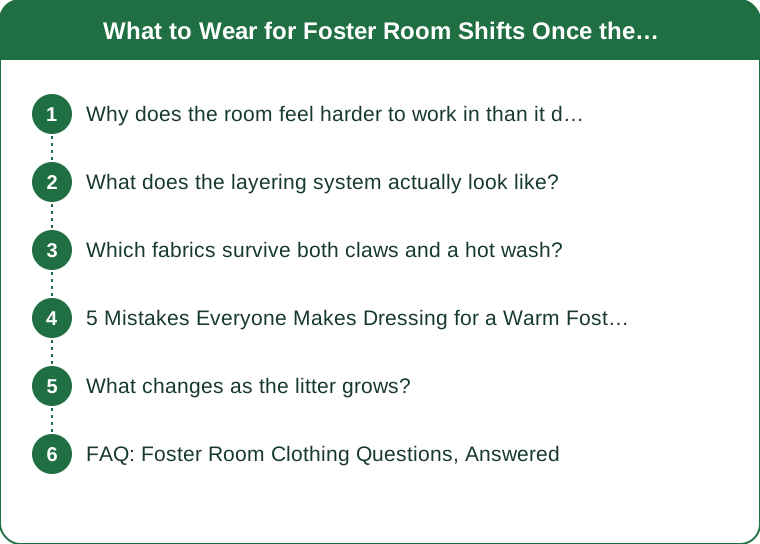
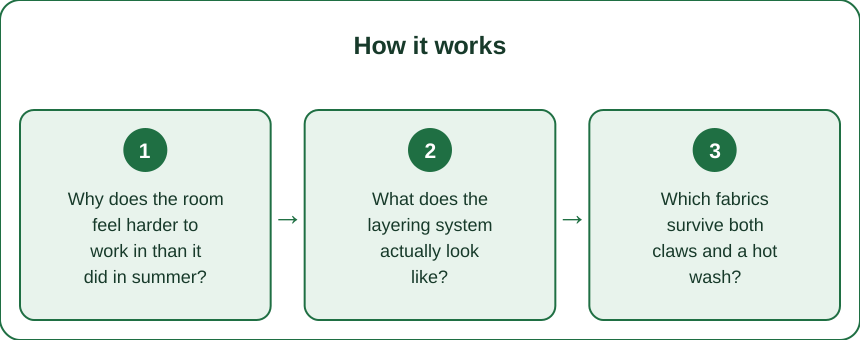
Why does the room feel harder to work in than it did in summer?
Because the temperature difference is now inside the house. In August the whole house was warm. In October the foster room is warm and the hallway is not, so you are moving between two climates every twenty minutes.
You dress for the front door and then work in the warm room. A jumper that is right for the rest of the house becomes uncomfortable within ten minutes of sitting on the floor with a heat pad running.
Floor work makes it worse. Heat rises, but kneeling next to a heat source with your body folded is where the warmth actually accumulates, and that is where you spend the shift.
Feeding shifts are physically active. Bottle rounds, weighing, cleaning and laundry are all movement, and you generate heat doing them.
And the layers you take off have to go somewhere. Anything you remove in a foster room ends up covered in fur, which is a small problem that becomes a daily one.
What does the layering system actually look like?
Base layer: fitted, breathable, and one you can wear alone. A close-fitting long-sleeve top or a fitted tee is the piece you will actually spend the shift in. It needs to be comfortable at room temperature plus several degrees.
Mid layer: a zip or button front, never a pullover. Anything you have to pull over your head is a problem in a room where you are constantly warming up and cooling down, and it drags across your face when it is covered in fur.
Bottom half: something you can kneel and sit cross-legged in for an hour. Leggings or soft joggers with enough stretch to move and enough weight to survive claws.
Keep an outer layer outside the room. A jumper or cardigan on a hook in the hallway means you are warm in the corridor without bringing more fabric into the fur environment.
Socks matter more than you expect. Bare feet on a floor you are cleaning is unpleasant, and shoes indoors is not ideal for a nursery. A dedicated pair of thick socks kept for shifts solves it.
And nothing loose at the wrists or neck. Dangling fabric near small kittens is both a snag risk and a hygiene problem.
Which fabrics survive both claws and a hot wash?
Tightly woven and smooth beats textured and looped. Claws catch in loops, which is why fleece, brushed knits and cheap jersey get destroyed while a dense ponte or a tight knit survives.
Look for higher denier and a smooth face. Fabric that a claw slides off rather than sinking into is what you want, and running a fingernail across it in the shop is a genuinely useful test.
Cotton blends handle hot washes better than pure synthetics. Anything going in at 60 degrees repeatedly needs to tolerate it, and delicate technical fabrics generally do not.
Avoid anything with a print that peels. Repeated hot washing lifts printed logos within a few months.
Dark colours hide stains and show light fur; light colours do the reverse. Mid-tones in grey, olive or navy are the practical compromise, and for health checks a lighter colour genuinely helps you spot what you need to spot.
And have enough of it. Three or four full sets in rotation means you are never tempted to reuse something between litters, which matters far more in the crowded autumn and winter foster season.
5 Mistakes Everyone Makes Dressing for a Warm Foster Room
Wearing the jumper you had on in the rest of the house. Ten minutes in, you take it off, and now there is a fur-covered jumper you have to deal with. Leave it at the door.
Choosing fleece because it is soft. Fleece is the single worst fabric for this job — claws catch instantly, it holds fur permanently, and it does not survive hot washing.
Underestimating how much you sweat during bottle rounds. Overnight shifts in a heated room are warmer work than they sound, and a heavy top makes a two-hour round genuinely uncomfortable.
Wearing the same clothes between different litters. Cross-contamination is the reason foster clothing exists as a category, and it matters more in the season when more litters are moving through.
Buying only for the current litter’s age. The fourth mistake catches most people, because a room set up for two-week-olds runs much hotter than one for eight-week-olds, and the clothing that worked in week two is wrong by week six — the room cools as they grow, and your layers should follow it down.
And the bonus: no pockets. You need somewhere for a thermometer, a pen and your phone, and a top with a chest pocket or joggers with secure pockets saves a surprising amount of walking.
What changes as the litter grows?
The room temperature drops in stages. Very young kittens need a much warmer environment; by six to eight weeks the room can come down considerably. Your layers should track that rather than staying fixed all season.
Claws get sharper and more coordinated. Week two kittens do not climb your leg. Week six kittens do, which is when snag-resistant fabric stops being optional.
Play sessions add movement. Later-stage fostering involves far more active floor time, so you want more stretch and more breathability than in the bottle-feeding phase.
Adoption events mean a different outfit entirely. Presentable, still fur-tolerant, and something you can crouch in — that is a separate set from the shift clothes.
And keep a spare set by the door in the last few weeks. Older kittens produce more mess in less predictable ways, and being able to change in thirty seconds is worth the drawer space.
Wash everything at the temperature your rescue advises, and keep foster laundry entirely separate from household laundry throughout.
FAQ: Foster Room Clothing Questions, Answered
How warm should the foster room actually be?
Follow the guidance from your rescue or vet, since it depends on the kittens’ age and health. Your job is to dress for whatever that number is rather than to adjust it for your own comfort.
Are aprons worth it?
For feeding and cleaning, yes. A wipeable apron over your base layer saves a change of clothes most shifts and comes off in a second.
How do I stop fur transferring to the rest of the house?
Change at the door, keep foster clothes in a lidded bin rather than the general laundry basket, and use a rubber glove rather than a lint roller — it pulls fur out of fabric far more effectively.
Is it worth buying dedicated clothing rather than using old things?
Usually yes, because old soft clothes are exactly the ones claws destroy. Two or three purpose-chosen sets outlast a drawer of hand-me-downs.
TL;DR:
- The foster room stays warm all winter — dress for that room, not for the hallway.
- Fitted breathable base, zip-front mid layer, and leave the outer layer outside the door.
- Smooth tight weaves survive claws; fleece and looped knits do not.
- Keep three or four sets, wash separately and hot, never reuse between litters.
- Drop a layer as the litter grows and the room temperature comes down.
The kittens set the thermostat. You just have to dress for it.
See It in Motion
Seen here: High Waist Jogger Sweatpants with Pockets — shop it on bubblelime.com
Keep Reading
This article is for general informational and styling purposes only. Fit, sizing, and product availability may vary.