Why Cat Claws Catch on Some Leggings and Not Others
Quick Answer: Cat claws catch on knit fabrics with long surface floats and loose gauge — think brushed, ribbed, or textured knits. Tight, high-gauge interlock and double-knit fabrics with short floats give claws nothing to hook. Fiber content matters far less than knit density: a tightly knit polyester-spandex blend outperforms a loosely knit one of identical composition.
You have the pair that survives everything, and the pair that pulled a two-inch thread the first time a kitten used your thigh as a launch pad.
The tag says the same thing on both. 87 percent polyester, 13 percent spandex.
So it is not the fiber. It is what the fiber was made into.

What actually makes a fabric snag-prone?
A claw does not cut fabric. It hooks a loop and pulls it out of line.
That means the question is not how strong the yarn is, it is how much of the yarn is exposed and unsupported on the surface. Textile people call an exposed span of yarn a float. Long floats, loose gauge, and raised texture all give a claw something to catch.
Rank them roughly from worst to best for a household with cats:
- Worst: brushed or peached surfaces, waffle knits, chunky ribs, anything with a visible nap
- Middle: standard single jersey, most jersey leggings
- Better: interlock and double knit, where both faces are tightly locked
- Best: high-gauge compression knits and warp knits, where the loops are short, dense, and locked in multiple directions
Gauge is the number nobody prints on a tag, but you can feel it. Stretch the fabric in front of a light. If you see through it easily, the loops are far apart and a claw has room to work.
Does fiber content matter at all?
It matters for what happens after the snag.
Nylon and polyester filaments are strong and slippery, so a pulled loop often slides back into place if you tug the fabric gently side to side. Cotton and rayon are weaker and grippier, so a pull tends to stay pulled, and a hard yank breaks the yarn and creates a hole.
Spandex percentage is a mixed factor. Higher spandex means the fabric is under more tension when worn, and a fabric under tension resists claw penetration better — but if a yarn does break, the recovery tension makes the run spread faster.
Practical takeaway: for cat households, look for high-gauge nylon-spandex or polyester-spandex in a double-knit or compression construction. Skip anything brushed, no matter how soft it feels in the store.
What Nobody Tells You About the Snag You Already Have
Never cut a pull flush with the surface. That converts a repairable snag into a permanent hole, because the loop it came from now has a free end that can keep unraveling.
Do this instead:
- Stretch the fabric gently in both directions across the pull — often the loop redistributes and half disappears
- For what remains, push the loose loop through to the inside of the garment with a blunt needle or a snag repair tool
- Secure it on the inside with a tiny knot or a dab of clear fabric glue if it is in a high-stress area
Wash pet-household knits inside out in a mesh bag. Most snags do not come from the cat directly — they come from a claw-loosened loop meeting a zipper in the washer.
And keep claws trimmed every two to three weeks. A blunt tip cannot hook. This is by far the highest-leverage fix and it is free.
What should you actually buy if you live with cats?
A short shopping filter:
- Feel for surface texture. Run your palm across it. Smooth and dense wins; fuzzy or ribbed loses.
- Hold it up to light. Opaque under stretch means high gauge.
- Check the seams. Flatlock and bonded seams have no raised ridge for a claw to catch; overlocked seams with a proud edge do.
- Prefer dark or heathered colors for lap-cat clothes. Not because they snag less, but because a pulled thread on a solid light fabric is far more visible.
- Avoid pockets with elastic mesh in cat households entirely. That is claw velcro.
For loungewear you will actually wear on the couch, a mid-weight compression-style legging or a dense scuba-knit pant will outlast three pairs of soft brushed ones.
FAQ: Cat Claws and Fabric Questions, Answered
Are there truly snag-proof fabrics?
No fabric is claw-proof, but tightly woven fabrics — not knits — come closest. A woven twill or canvas has essentially no free loops. That is why so many people who foster kittens end up living in denim.
Does softener help or hurt?
Fabric softener coats fibers and slightly increases surface slip, which can help marginally, but it also degrades spandex over time. Skip it and use a lower-heat dry cycle instead.
Will a lint shaver fix pilled snag damage?
It handles pills but not pulls. Shaving over a pulled loop cuts it, which is the one thing you want to avoid. Pull it through to the inside first, then shave the rest of the garment if needed.
TL;DR:
- Claws hook exposed loops, so knit density and surface texture matter more than fiber content
- High-gauge interlock, double knit, and compression fabrics resist; brushed and ribbed fabrics invite
- Never cut a pull — push it through to the inside and secure it
- Trimming claws every two to three weeks prevents more damage than any fabric choice
Next time you shop, do the light test and the palm test before you look at the tag. Two seconds each, and they predict snag resistance better than the fiber percentages do.
See It in Motion
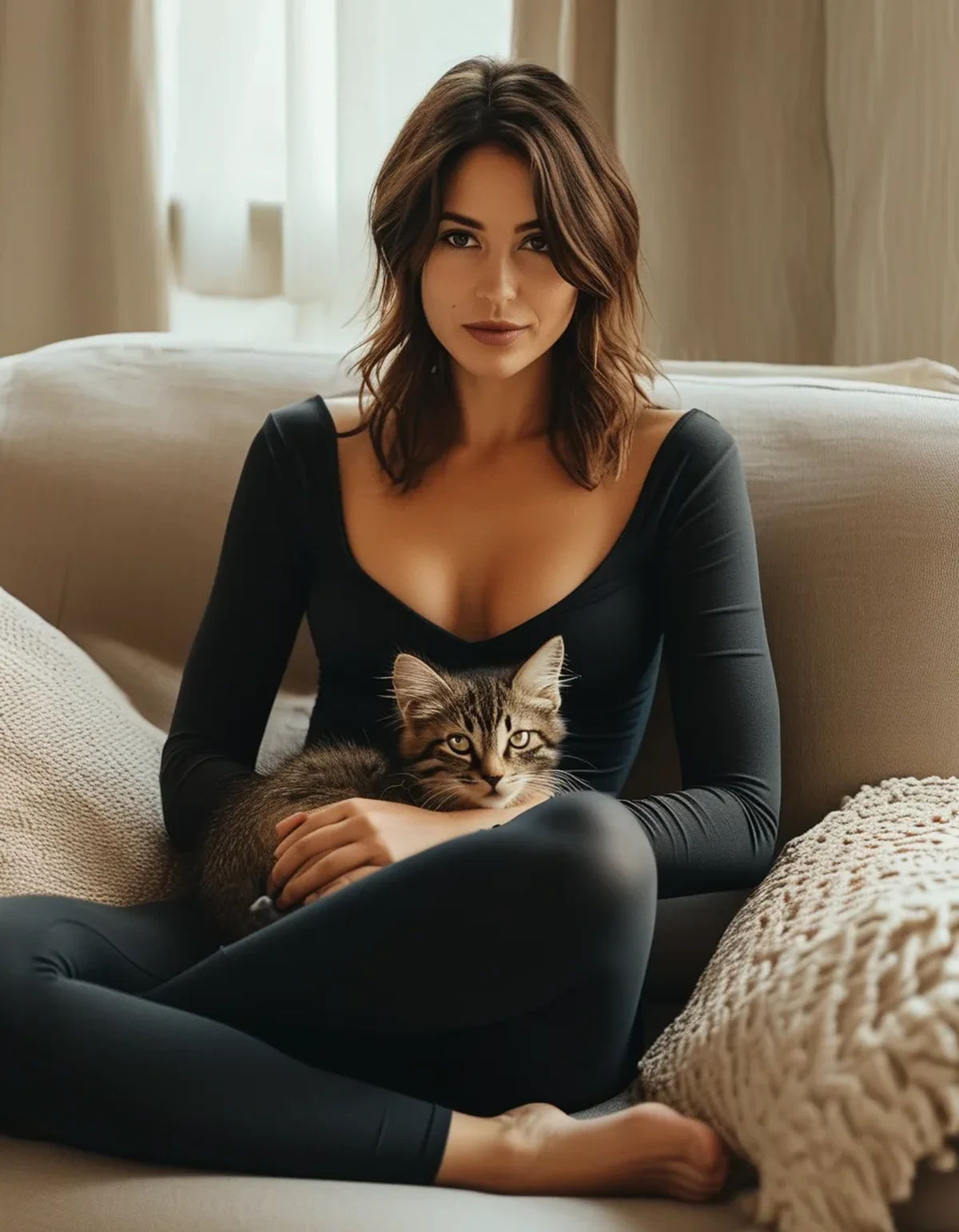
Seen here: High Waist Yoga Leggings with Inner Pocket — shop it on bubblelime.com
Keep Reading
This article is for general informational and styling purposes only. Fit, sizing, and product availability may vary.