What to Actually Wear for Overnight Bottle Feeding Rounds
Quick Answer: The overnight feeding uniform has four jobs: wash hot, resist snags, stay warm without overheating a kitten, and let you move at 3am without fully waking up. That means smooth-faced knits over anything looped or brushed, sleeves you can push to the elbow and keep there, darker mid-tones that hide formula, and layers you can add or drop without changing your whole outfit.
What you do not want: fleece, loose knits, anything with a drawstring near a kitten, and anything that only washes cold.
Here is the actual kit, and why each piece earns its place.
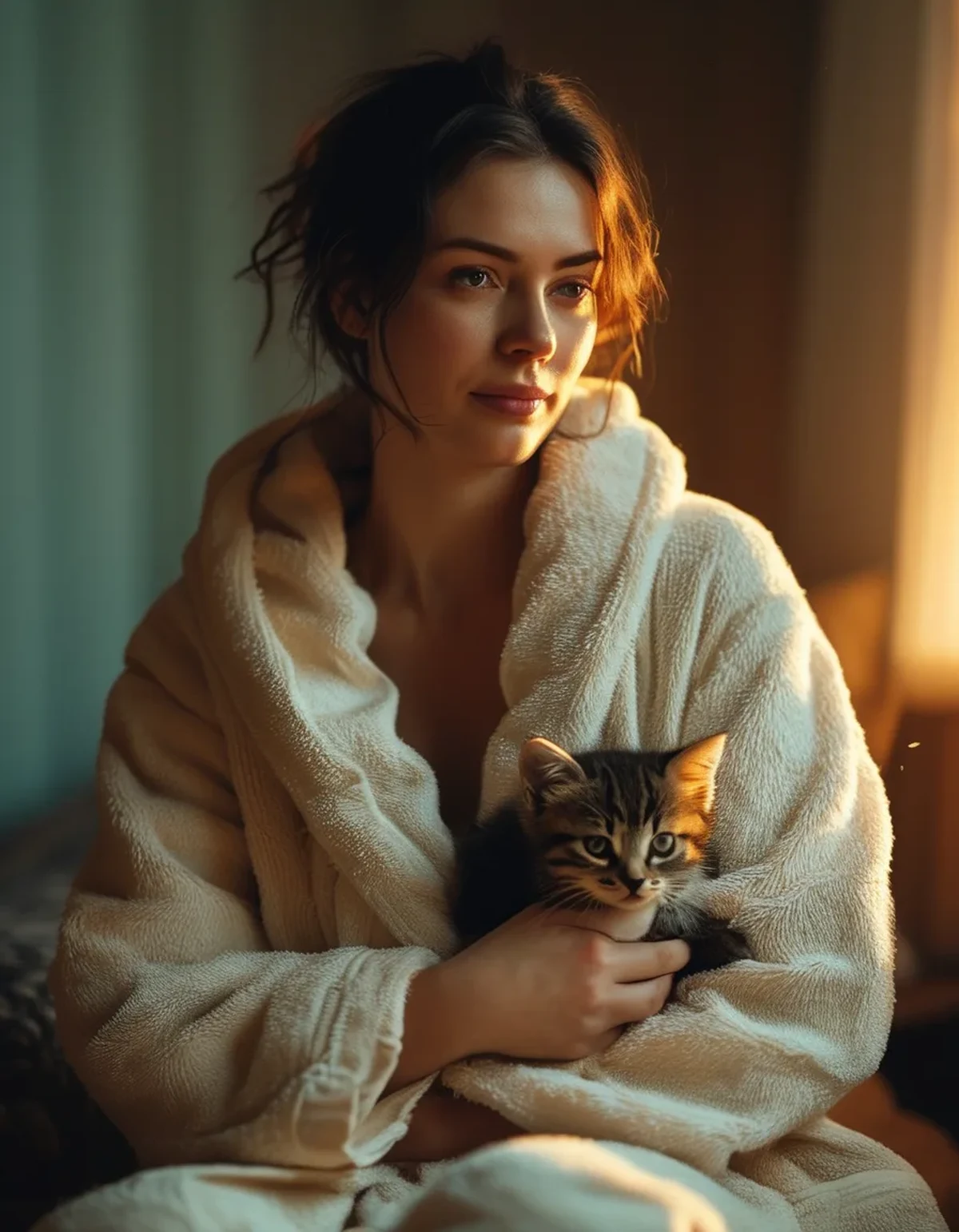
Why regular loungewear fails at 3am
The pyjamas you love are usually the worst possible choice, and every foster figures this out the hard way in week one.
Fleece and brushed fabrics shed onto the kitten. A neonatal kitten’s face ends up pressed against your sleeve for 20 minutes at a time. Loose fibres near the nose and eyes are a genuine irritation issue, and fleece sheds constantly.
Looped and waffle knits catch claws. Even at three weeks, kitten claws are needle-fine and non-retractable enough to snag anything with a loop. A snagged claw means a panicked kitten mid-feed, which means an interrupted feed and a stressed animal.
Long loose sleeves get into the formula. Anything that drapes will end up in the bottle, in the kitten’s face, or both. A sleeve you have to hold out of the way is a sleeve occupying a hand you do not have.
And most sleepwear does not want a hot wash. Formula, urine, and everything else on the fostering list need a properly hot cycle, and delicate sleepwear degrades fast under that. You will be washing this every single day.
Then there is the temperature problem. Neonatal kittens cannot regulate their own temperature, so the room is warm. You are dressing for a warm room while half asleep and moving between rooms, which is why one thick layer fails and two thin ones work.
The pieces that actually work
Small list, worn in rotation, all of it washable at high temperature.
The base layer. A smooth cotton or cotton-modal fitted tee or long sleeve - flat surface, no loops, no brushed face. Fitted rather than loose so nothing drapes into the feed. Buy three or four identical ones; you will use all of them.
The bottoms. Mid-weight leggings or slim joggers in a smooth knit, ankle-length. Wide legs collect everything off the floor and catch on carrying crates. A high, wide waistband matters more than you would think when you are sitting cross-legged on the floor for the fourth time tonight.
The layer. A zip-front cardigan or light zip hoodie in a smooth knit - zip rather than pullover, because you take it on and off one-handed while holding a kitten. Nothing with a drawstring: cords near kittens are a strangulation risk and are not worth the convenience.
The apron nobody expects to need. A plain cotton apron or an oversized shirt worn open over the top, changed far more often than the outfit underneath. This is the single best trick in neonatal fostering - it absorbs the mess and swaps in five seconds, so the outfit underneath lasts three feeds instead of one.
Colour. Mid-tone neutrals - grey, navy, olive, dusty rose. Formula shows on black and everything shows on white, and mid-tones hide both while still letting you spot anything on a kitten that needs attention.
On your feet: grippy socks or soft slip-ons. Bare feet on a floor where a two-week-old kitten might be is how accidents happen.
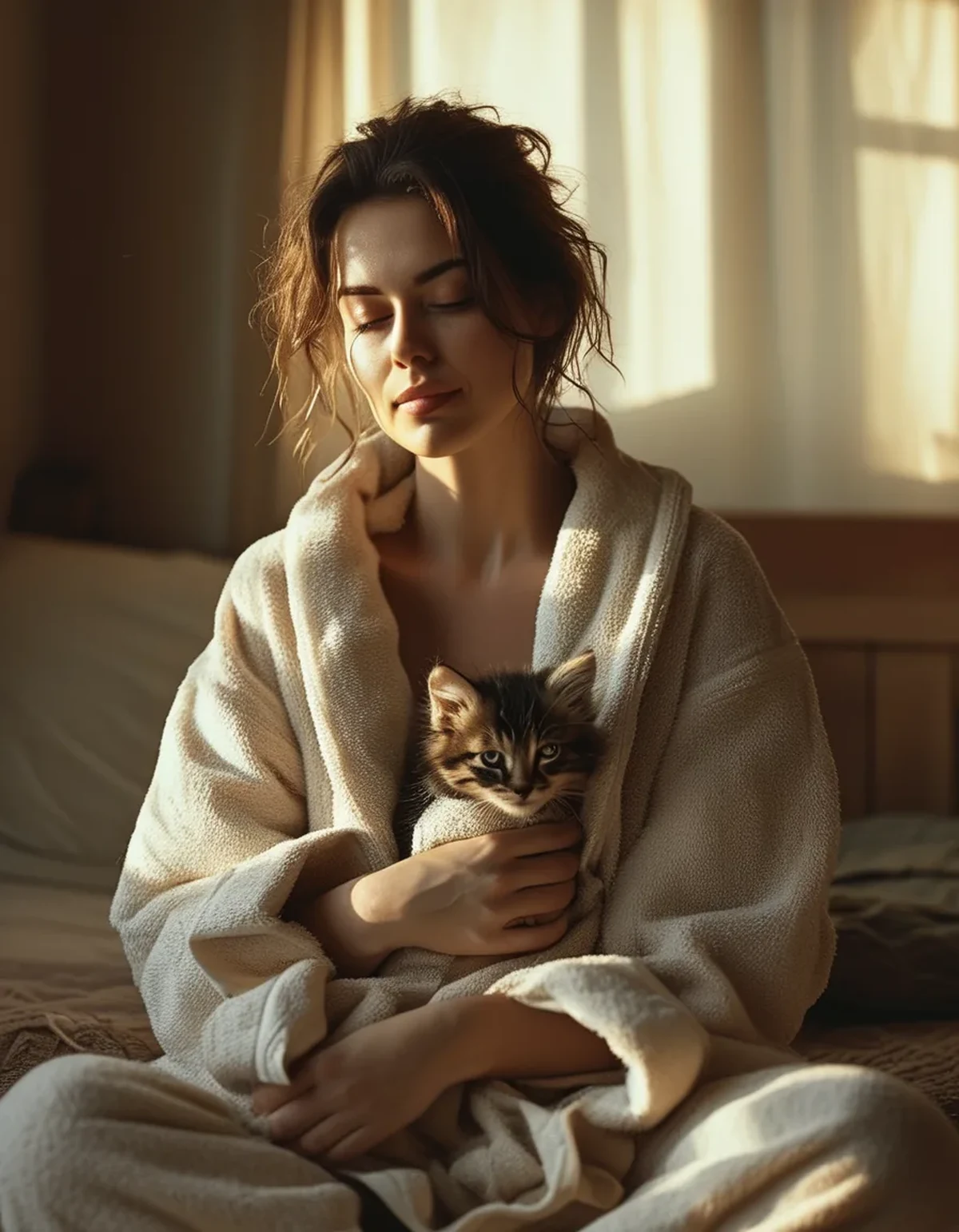
5 Mistakes Foster Parents Make With Night Clothes
1. Wearing a hoodie with a front pocket. It seems perfect for carrying things and it is a trap - a kitten will end up in it, and a kangaroo pocket is not a safe carrier. Warmth should come from a heat source you control, not from your clothing.
2. Buying only one set. You need at least three complete sets in rotation because one is being worn, one is in the wash, and one is drying. Fostering nights do not accommodate laundry planning.
3. Keeping jewellery on. Rings and bracelets catch fine claws and scratch fragile skin. Take everything off before the first night feed and leave it off for the duration - putting it on and off at 3am is how things get lost.
4. Wearing something scented. Fabric softener, perfume, scented detergent - kittens navigate by smell almost entirely at this age, and a heavily scented sleeve is disorienting during a feed. Fragrance-free detergent, no softener, and softener also leaves a residue that reduces absorbency anyway.
5. Dressing warm for the hallway instead of the room. The kitten room is kept warm. You will overheat in the outfit that felt right in the cold hallway, and then you will strip a layer mid-feed with one hand. Dress for the warm room and carry the layer.
The fourth one is the one experienced fosters mention most and new fosters have never considered.
Keeping it all clean without destroying it
This wardrobe gets washed harder than anything else you own. Choose accordingly and it lasts.
The washing routine:
- Hot wash, 60°C where the fabric allows, which is the temperature that actually matters for hygiene
- Fragrance-free, dye-free detergent. No softener - it coats fibres, reduces absorbency, and leaves a scent that does the kitten no favours
- Pre-treat formula and protein stains with cold water first. Hot water sets protein stains permanently - rinse cold, then wash hot
- Wash fostering clothes separately from the rest of the household laundry, as a straightforward hygiene measure
- Skip the dryer on knits where you can. Repeated hot drying is what turns a smooth surface fuzzy, and a fuzzy surface is exactly what you were avoiding
Fur removal, in order of what actually works: a rubber pet brush or damp rubber glove dragged across the fabric beats a lint roller by a wide margin on knits. A 10 minute no-heat tumble with a dryer ball before washing pulls a surprising amount of loose fur into the lint trap and out of your machine.
Budget honestly. Four smooth cotton tees, two pairs of leggings, one zip cardigan, and three cotton aprons covers a full fostering cycle and costs less than one nice piece of loungewear. Treat it as equipment rather than as a wardrobe, replace it between litters, and do not use anything you would be sad to ruin.
FAQ: Overnight Fostering Clothes Questions, Answered
Can I just wear an old t-shirt and be done with it?
You can, and plenty of people do. The two upgrades worth making are a snag-free knit rather than a worn one that has gone fuzzy, and an apron on top so the shirt survives more than one feed.
What about scratches - should I wear long sleeves?
Long sleeves you can push up are the right answer, since kitten age changes the calculus weekly. At two weeks there is nothing to protect against; at six weeks there very much is, and by then you want a smooth long sleeve you can roll down.
Is there a reason to avoid wool?
Two - it usually cannot take a hot wash, and most wool knits have enough surface texture to catch fine claws. Smooth cotton and cotton blends do the same warmth job in this context with none of the downside.
How do I stop tracking things between the kitten room and the rest of the house?
A dedicated pair of slip-ons left at the door of the kitten room, and the apron coming off before you leave. Both take two seconds and do most of the work.
TL;DR:
- Smooth-faced knits only - fleece sheds and loops catch claws
- Fitted sleeves you can push up, no drawstrings, no front pockets
- A cotton apron over the top swaps in five seconds and saves the outfit underneath
- Mid-tone neutrals hide formula; fragrance-free detergent, no softener, hot wash
- Three full sets in rotation, treated as equipment rather than clothing
Before the next litter arrives, put together three identical sets and leave them folded in the kitten room. The 3am version of you will not be making decisions.
See It in Motion
Seen here: High Waist Yoga Leggings with Inner Pocket — shop it on bubblelime.com
Keep Reading
This article is for general informational and styling purposes only. Fit, sizing, and product availability may vary.