What to Wear in a Foster Room That Never Cools Down
Quick Answer: Neonatal kittens need an ambient temperature around 75 to 80 degrees, which is genuinely uncomfortable for a person sitting still for hours. Wear a thin moisture-wicking base layer, a loose short-sleeve top over it, and cropped or capri-length bottoms in a smooth-faced fabric that claws slide off rather than catch. Keep a second top nearby - you will change it.
The fabric choice matters more than the amount of clothing.

Why is the foster room so much hotter than the rest of the house?
Because it is supposed to be, and the number is higher than most people expect.
Neonatal kittens cannot regulate their own body temperature for the first three to four weeks. Standard fostering guidance puts the ambient room temperature at around 75 to 80 degrees Fahrenheit for the youngest kittens, easing down toward the low 70s as they grow. That is a room you keep deliberately warm while the rest of the house runs at 72.
In late summer this compounds. The room is often the smallest bedroom, frequently with a heating pad running in a corner of the enclosure, the door closed to keep the rest of the household out, and limited air movement because you do not want a draft on the kittens. A closed small room with a heat source and no airflow runs several degrees above whatever the thermostat says.
Then there is what you are doing in there. Bottle feeding a litter is not a five-minute job - it is often 45 minutes to an hour per round, several times a day, sitting on the floor, mostly still, holding warm bodies against you. Your own heat has nowhere to go.
The practical consequence is that you cannot dress for the weather outside or even for the rest of your house. You are dressing for a specific microclimate that is warmer, more humid, and covered in things that stick to fabric.
What fabrics actually work in this situation?
Two requirements that pull in different directions: breathability, and a surface that claws do not catch.
Smooth-faced synthetics win. A tightly knit polyester or nylon-spandex blend with a flat surface lets tiny claws slide off rather than hook in. This is the same property that makes some leggings survive cats and others come out of a session covered in pulls.
Avoid anything with a loop or a loft. French terry, waffle knit, brushed fleece, boucle, and loose-gauge cotton knits are all made of loops, and a loop is exactly what a claw catches. One kitten climbing your leg turns a favourite sweatshirt into a snagged one.
Cotton feels cooler and behaves worse. It breathes nicely and it absorbs everything - formula, wet wipes, the inevitable accidents - then stays damp against your skin in a warm room. A thin moisture-wicking synthetic base layer is genuinely more comfortable over a two-hour session even though cotton feels better in the first five minutes.
Ribbed knits are a reasonable middle ground. Fine ribbing is dense enough to resist most claws while still being stretchy and comfortable to sit cross-legged in.
Bamboo and modal blends are the compromise for anyone who cannot tolerate synthetics against the skin - smooth-faced, breathable, and reasonably quick to dry, though less durable against repeated washing at high temperatures.
One unexpected factor: light colours show formula, dark colours show fur. Neither is winnable, so pick based on which litter you have. A tabby litter argues for mid-tone grey; a white or cream litter argues for the opposite.
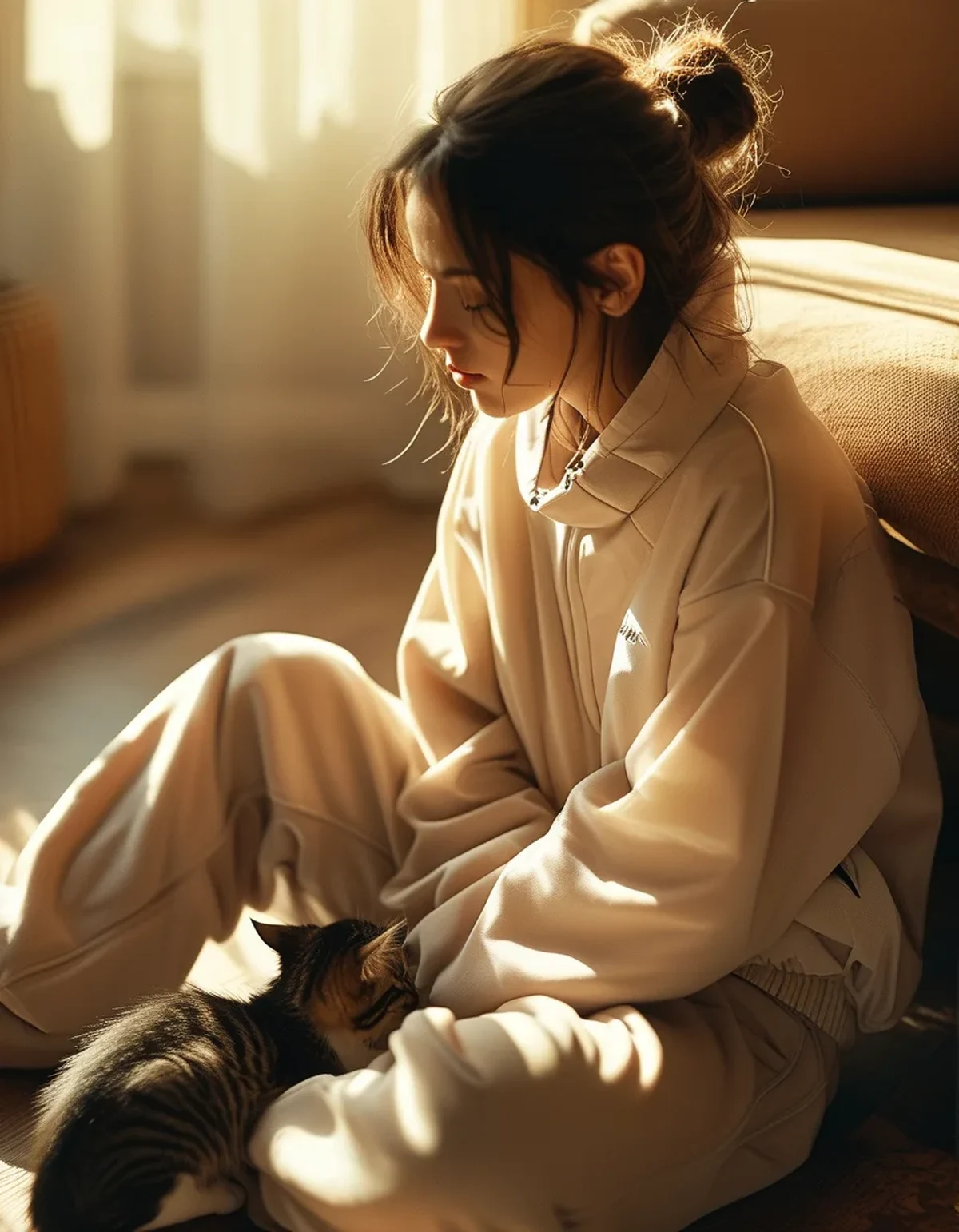
How should you actually build the outfit?
Think in terms of a session rather than a day.
Base layer: thin, fitted, moisture-wicking, short sleeve or tank. This is the layer doing the actual work of moving sweat away from your skin, and it should be smooth enough that a climbing kitten slides.
Over layer: loose short-sleeve tee or a lightweight open shirt you can remove in thirty seconds. The loose layer creates air space, which helps more than being underdressed, and it is the layer that takes the mess.
Bottoms: cropped leggings, capris, or bike shorts in a smooth knit. Full-length is too warm; loose shorts leave bare legs for claws to climb, which is its own problem. Cropped and fitted is the sweet spot.
Knees: if you spend time kneeling at the enclosure, a fitted bottom with real four-way stretch is the difference between comfortable and constantly readjusting. A folded towel does more for your knees than any garment.
Feet: grip socks. Bare feet in a room where formula gets spilled is a slip risk, and shoes bring in whatever was outside.
Hair up, sleeves short, no dangling anything. Drawstrings, long necklaces, and loose sleeve cuffs are all toys as far as a four-week-old is concerned.
Keep a spare top in the room, not in the bedroom. You will need it, and going to get it means opening the door.
Wash it separately and immediately. Foster laundry belongs in its own load, warm water, no fabric softener - softener coats fibers and makes fur cling harder, which is the opposite of what you want.
5 Mistakes Foster Volunteers Make With Clothing
1. Dressing for the house instead of the room. The rest of your home is at 72 degrees and the foster room is at 79. Every August, people put on the same thing they wore all morning and then sit in a hot room in a cotton sweatshirt.
2. Wearing a favourite piece in there once. It only takes one session. Designate two or three specific outfits as foster clothes and keep everything else out of the room entirely - it is far less painful than losing a good sweater to a snag.
3. Choosing loose shorts to stay cool. Bare legs are a climbing surface, and kitten claws on bare skin is how foster volunteers end up with scratched shins. Cropped and fitted covers the skin without the heat of full length.
4. Using fabric softener on foster laundry. It leaves a coating that fur clings to, and it can irritate sensitive skin - both yours and, indirectly, theirs. Skip it. A half cup of white vinegar in the rinse does more for odour anyway.
5. Not having a change of clothes within reach. Between formula, wipes, and the general chaos, you will get soaked at some point during a long feeding round. Having the spare in the room means you change in ten seconds instead of leaving four kittens loose while you go find one.
FAQ: Foster Room Clothing Questions, Answered
Can I run a fan in the foster room?
Not pointed at the kittens, and not for the youngest ones. A fan moving air near the ceiling or in a doorway, well away from the enclosure, can help you without creating a draft on them. Check with your rescue organization - their protocol governs.
How do I get formula stains out?
Rinse in cold water immediately - hot water sets protein stains. Then wash warm with a standard detergent. Anything left after that responds well to an enzyme-based pretreatment.
What about cat hair on activewear?
A rubber glove dragged across dry fabric pulls more hair than any lint roller, and a full dryer cycle on air-only before washing removes a surprising amount. Skipping fabric softener helps more than any tool.
Do I need to change clothes between litters?
If you foster more than one litter, yes, absolutely, and your rescue will have a protocol for it. Cross-contamination between litters is a genuine health risk for kittens, and clothing is one of the ways it travels.
Is there a fabric that truly resists claws?
Nothing is claw-proof, but tightly woven nylon and dense smooth-faced polyester come closest. The test is to run a fingernail across the fabric - if it catches at all, a claw will catch more.
TL;DR:
- Foster rooms run 75 to 80 degrees on purpose, so dress for that microclimate rather than for your house.
- Smooth-faced synthetics resist claws. Anything with loops - terry, waffle, fleece - snags on the first climb.
- Thin wicking base, loose short-sleeve over it, cropped fitted bottoms, grip socks.
- Keep a spare top inside the room, and designate a few outfits as foster-only.
- Wash separately, skip fabric softener, rinse formula in cold water first.
Get the fabric right and the rest of it is just laundry.
See It in Motion
Seen here: Super High Waist Embossed Yoga Leggings with Inner Pocket — shop it on bubblelime.com
Keep Reading
This article is for general informational and styling purposes only. Fit, sizing, and product availability may vary.