Snag-Proof Fabric: What Actually Resists Cat Claws (And What Doesn't)
Quick Answer: No activewear fabric is truly claw-proof, but snag resistance is real and measurable — it comes down to knit density (how tightly fibers are looped together), fiber type (continuous filament nylon resists initiation better than looser cotton-blend spun yarns), and reinforced weave structures like ripstop, which stop a single snag from turning into a run. The goal isn’t finding an indestructible fabric; it’s picking one where a claw catch stays a tiny snag instead of unraveling a whole row.
You know the moment: you’re mid-stretch on the living room floor, and your kitten decides your leggings are the perfect launching pad. Sometimes nothing happens. Sometimes you end up with a pulled thread trailing down your shin for the rest of the day. It’s not random luck — the fabric under those claws is doing (or failing to do) something specific, and once you know what to look for, you can stop guessing which leggings are safe to wear during playtime.

What Makes a Fabric “Catch” a Claw in the First Place?
A snag happens when a claw tip slides between individual fibers or loops and catches on one, pulling it out of its original position. What happens next depends entirely on how that fiber is held in place by the surrounding structure.
In a knit fabric (which is what most leggings are made from), yarn is looped through itself in continuous rows, like a giant sweater made of very fine thread. If the loops are packed tightly together, a caught fiber has nowhere to travel — the surrounding loops hold it in place, so you get a tiny surface snag that can often be smoothed back down with a fingernail. If the loops are loose or widely spaced, that same caught fiber can slide and drag its neighboring loops with it, which is how one claw catch becomes a two-inch run.
This is why knit density (sometimes listed as gauge, or measured informally by how much light passes through the fabric when held up) matters more than almost anything else on a spec sheet. A dense, opaque knit has less room for a claw to find purchase between fibers to begin with, and even when it does, there’s less slack in the structure for the damage to spread.
Fiber thickness and smoothness matter too — a fine, smooth filament offers a claw tip less to grab onto than a thicker, fuzzier spun yarn, independent of how tight the knit is.
Nylon vs. Cotton-Blend Knits — Which Actually Holds Up?
Fiber type changes snag behavior at the molecular level, not just the surface level. Nylon is typically made as a continuous filament — one long, unbroken strand extruded as a smooth fiber, then knit into fabric. Because there’s no fuzzy end or short fiber segment sticking out, there’s less for a claw tip to hook onto in the first place, and the fiber itself has high tensile strength, so it resists tearing even under a firm pull.
Cotton and cotton-blend jersey knits, by contrast, are usually spun yarn — short natural fibers twisted together into a single thread. Those twisted-together short fibers create a slightly textured, fuzzy surface (look closely at a cotton tee and you’ll see tiny loose fiber ends). That texture is exactly what claws catch on, and because the yarn is made of many short pieces rather than one continuous strand, a snag can work a fiber loose more easily, and the pull can travel.
This doesn’t mean cotton blends are unwearable around cats — a tight cotton-poly jersey knit can still outperform a loose, open nylon mesh. But all else being equal, a smooth continuous-filament nylon or nylon-spandex blend in a tight knit is the more snag-resistant starting point, which is why most performance leggings marketed for durability lean nylon-heavy rather than cotton-heavy.
Spandex/elastane, present in most stretch leggings, adds recovery and stretch but isn’t itself the snag-resistance factor — it’s along for the ride, wrapped around the structural fiber.
What Is Ripstop, and Does It Actually Work on Leggings?
Ripstop is a weaving technique originally developed for parachutes and outdoor gear, where a thicker reinforcing thread is woven into the base fabric at regular intervals — usually in a visible crosshatch grid you can see or feel as a subtle grid texture. The reinforcing threads act like stop points: if a tear or snag starts, it runs until it hits one of those thicker threads, then stops instead of continuing across the whole panel.
On leggings, true woven ripstop is rare (most leggings are knit, not woven, for stretch), but some brands now build ripstop-inspired reinforced knits — denser reinforcement grids knit directly into stretch fabric at claw-prone zones like the thighs and calves. The mechanism is the same idea adapted to knitwear: contain the damage instead of preventing every possible catch.
This matters because it resets expectations correctly. Ripstop-style construction doesn’t mean a claw won’t catch — it means that when it catches, you get a small, contained snag instead of a run traveling six inches down your leg. If a product specifically advertises reinforced knit zones or a grid-textured panel, that’s a genuine, physically meaningful feature, not just marketing language — just don’t expect it to mean claws bounce off entirely.
What Nobody Tells You About “Snag-Proof” Marketing
Here’s the part most product pages leave out: no consumer legging fabric is claw-proof, and any listing that implies otherwise is overselling. Cat claws are sharp enough to penetrate essentially any garment-weight fabric if the angle and pressure are right — a determined kitten mid-zoomies can snag a fabric that handled a hundred gentle paw-taps just fine.
What “snag-resistant” actually means in honest terms is reduced snag initiation and contained snag spread — fewer catches happen, and the ones that do happen stay small. That’s a meaningful, real difference in day-to-day wear, but it’s not the same promise as “your kitten cannot damage these.”
A few other things worth knowing: matte finishes generally snag less visibly than shiny, coated fabrics, because a snag on a matte surface disrupts the texture less noticeably. Seams and flatlock stitching are common failure points — a claw that catches a seam edge can pull thread loose faster than one that catches mid-panel, since seam thread is often finer than the body fabric. And older leggings snag more easily than new ones, because repeated wear and washing gradually loosens knit tension throughout the fabric, even before any claw gets involved.
Buying for genuine snag resistance means reading past “cat-proof” claims to the actual construction details — knit density, fiber type, and reinforcement — because those are the parts that hold up under an actual kitten.
FAQ: Snag-Proof Fabric Questions, Answered
Is there any fabric that’s truly claw-proof?
Not in activewear. Ballistic-grade materials exist, but they’re not comfortable, stretchy, or breathable enough for a workout. The realistic goal is minimizing snag initiation and containing spread, not eliminating risk entirely.
Can I fix a snag once it happens, or is the fabric ruined?
Small snags on a tight knit can often be smoothed back into place by gently pulling the surrounding fabric flat and pushing the loop back through with a needle from the inside — don’t cut the loose thread, which can make it worse. Larger runs on loose knits are usually permanent.
Does thicker fabric always mean more snag resistance?
Not necessarily — thickness and knit density are related but not identical. A thick, loosely knit fabric can still snag easily, while a thinner, very tightly knit fabric can resist better. Density (how packed the loops are) matters more than raw thickness.
Should I avoid mesh panels entirely if I have a cat?
You don’t have to avoid them, but treat them as higher-risk zones. Mesh is inherently open-structured for breathability, which means less material holding any one fiber in place. Save mesh-panel leggings for times your cat isn’t in play mode nearby.
TL;DR:
- Snags start when a claw catches a fiber; whether it spreads depends on knit density, not luck
- Continuous-filament nylon resists snag initiation better than fuzzy, spun cotton-blend yarns
- Ripstop-style reinforced knit zones contain damage rather than preventing every catch
- “Snag-proof” marketing oversells — the honest goal is fewer, smaller, containable snags
No fabric beats a determined kitten every time, but a tight nylon-spandex knit will lose a lot less often than a loose cotton blend.
See It in Motion
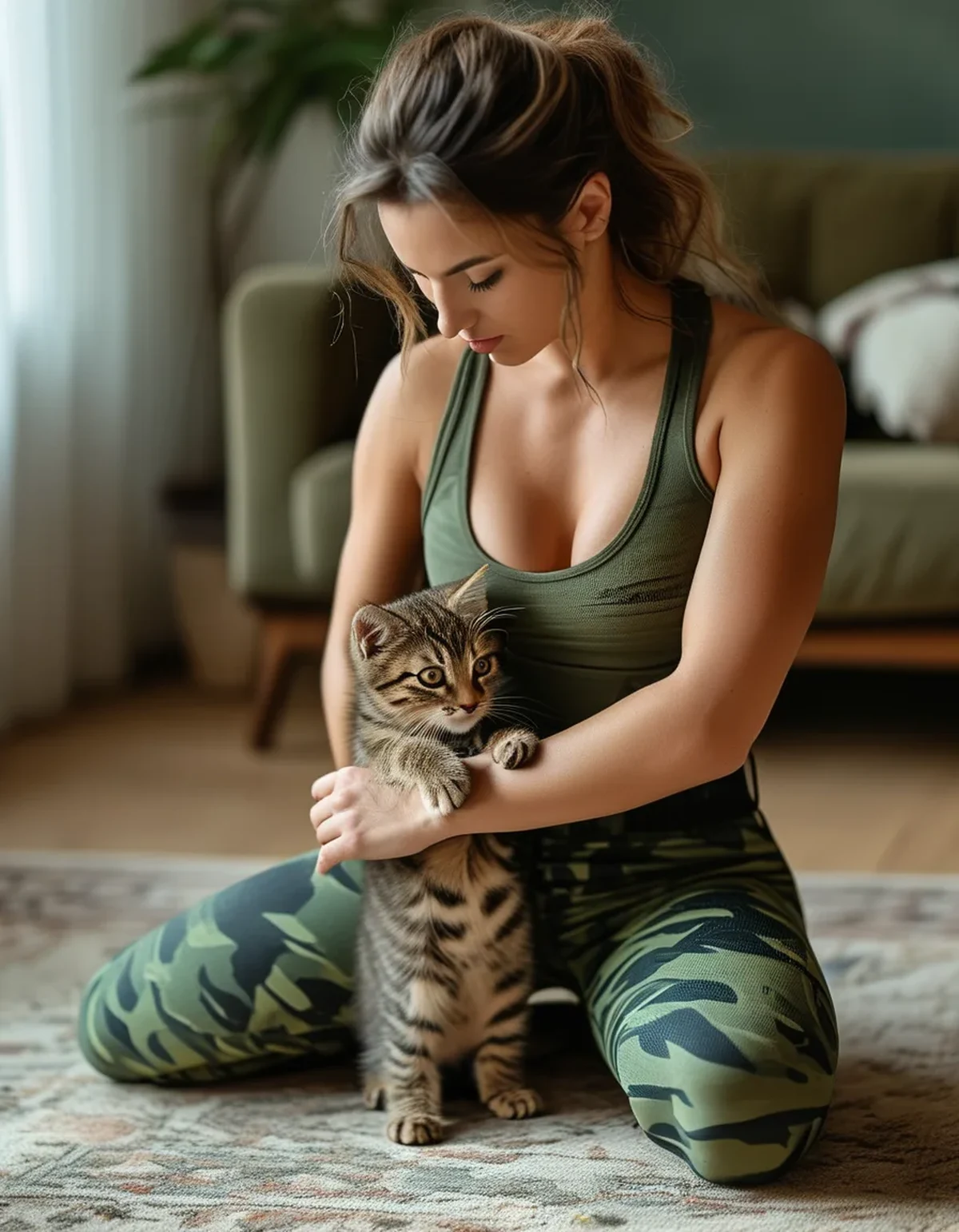
Seen here: High Waist Yoga Leggings with Inner Pocket — shop it on bubblelime.com
Keep Reading
This article is for general informational and styling purposes only. Fit, sizing, and product availability may vary.