Why Cat Hair Clings to Some Leggings and Slides Off Others
Quick Answer: Cat hair clings to fabrics that build static charge and have enough surface texture for the hair to physically hook into — which is why fleece and brushed knits are magnets while smooth, tightly-knit synthetics shed hair easily. Reducing static through humidity or an anti-static spray, and choosing dense smooth knits, addresses both mechanisms at once.
The cat isn’t the variable. The fabric surface is.
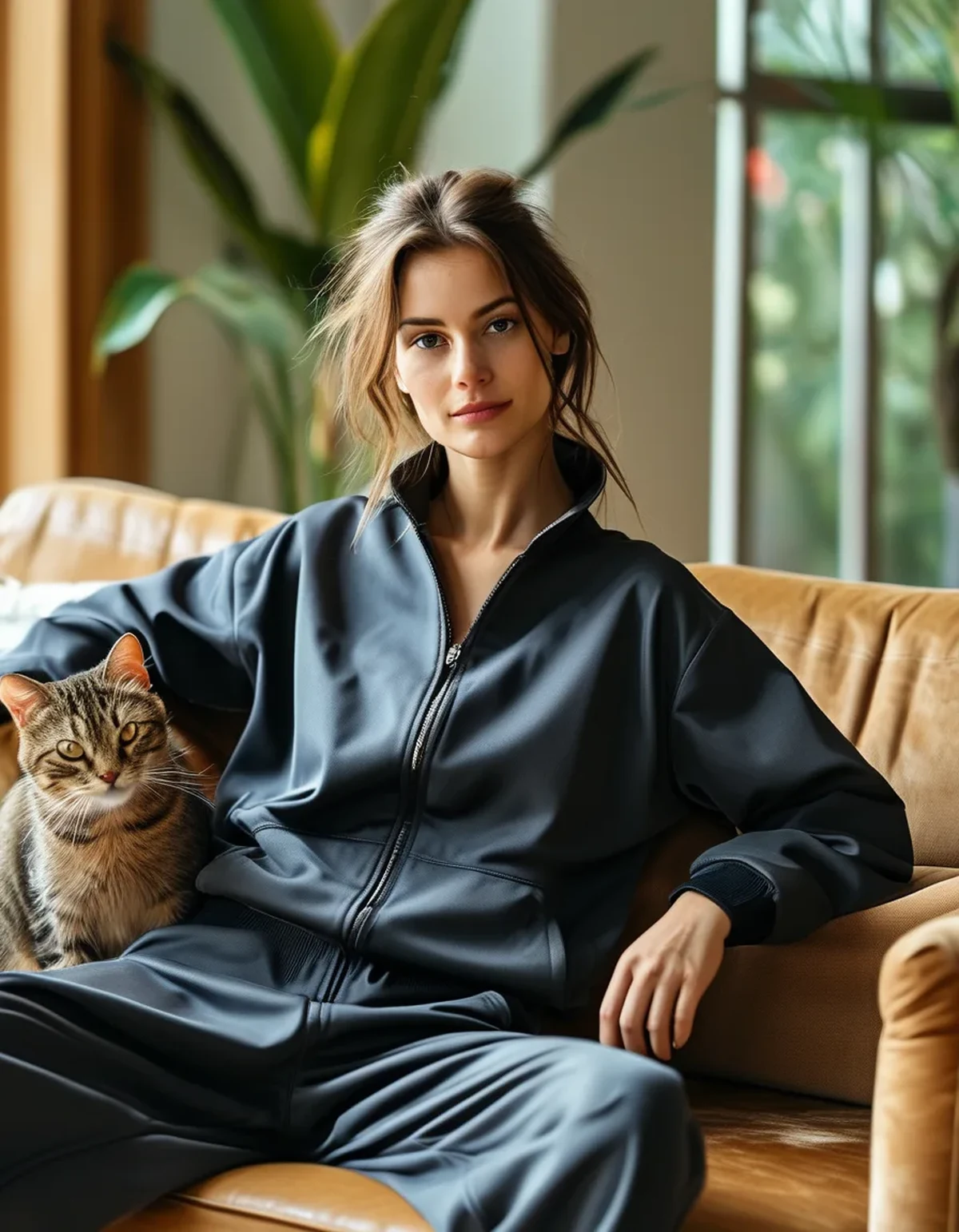
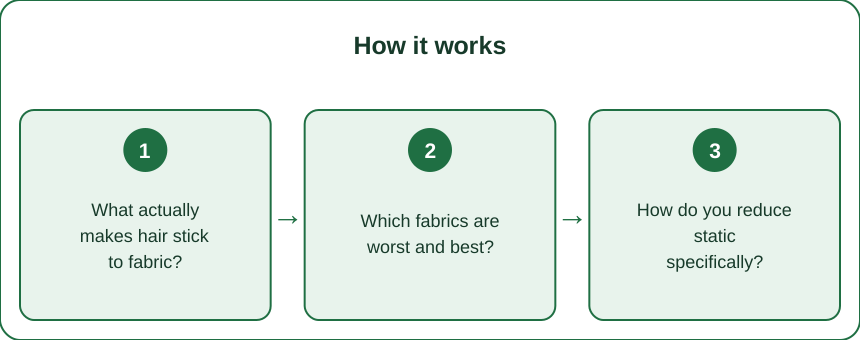
What actually makes hair stick to fabric?
Two separate mechanisms working together. Static electricity builds when fabrics rub against each other or against fur, leaving the fabric charged — and charged fabric attracts lightweight hair from a distance and holds it against gravity.
Mechanical grip is the second: hair physically catches on raised fibers, loops, or an open knit structure. A fleece surface has thousands of raised fiber ends for hair to hook into, while a smooth tight knit offers almost nothing to catch on. When both mechanisms are present — a static-prone brushed synthetic — hair adheres strongly enough that shaking the garment does nothing at all.
Which fabrics are worst and best?
Worst: fleece, brushed knits, sherpa, and anything with a raised nap. These combine mechanical grip with high static generation, which is the maximum-adhesion combination.
Best: smooth, tightly-knit synthetics like a dense nylon-elastane legging — minimal surface texture for hair to catch on, and the tight knit means nothing works its way into the fabric structure. Mid-range: cotton and cotton blends, which generate less static than synthetics but have more surface texture than a smooth performance knit. A tightly woven smooth surface beats a soft one every time here, which is a real tradeoff if you like brushed fabrics.
How do you reduce static specifically?
Humidity is the most effective lever — static builds far more readily in dry air, which is why the problem worsens noticeably as heating season starts. A humidifier in the room where you dress makes a measurable difference.
An anti-static spray works directly by making the fabric surface slightly conductive so charge dissipates rather than accumulating. Dryer sheets reduce static too, but they leave a coating that degrades wicking on performance fabrics, so they’re a poor choice for activewear specifically — better to air-dry and use a spray if needed. Wool dryer balls are a reasonable middle ground, reducing static without the coating.
What removes hair most effectively once it’s there?
A damp rubber glove outperforms a lint roller on synthetics by a wide margin. Run a slightly damp rubber or latex glove across the fabric — the friction lifts hair and the dampness neutralizes static so it doesn’t immediately reattach.
A rubber pet-hair brush works the same way on larger areas. Lint rollers work fine for a light dusting but struggle when hair is genuinely embedded in a textured surface. A 10-minute no-heat air-fluff cycle in the dryer with a dryer ball loosens hair and captures it in the lint trap, which is effective for a whole load at once. Whatever you do, remove hair before washing — washing embeds it further and can transfer it to the entire load.
What Nobody Tells You About Pet Hair and Fabric
Washing hair-covered clothing makes it worse. Agitation drives hair deeper into the knit, and the hair redistributes across everything else in the machine. A pre-wash removal step saves the whole load.
Color matching is a false economy. Matching your fabric to your cat’s fur hides the hair but doesn’t remove it — and the hair still transfers to furniture, car seats, and everyone you hug.
Static-prone fabrics also attract dust and lint, so the same pairs that collect cat hair look dingier overall. Choosing smooth dense knits helps with more than just the pet problem.
FAQ: Cat Hair and Activewear Questions, Answered
Does fabric softener help with pet hair?
It reduces static, which helps somewhat — but it coats performance fabrics and degrades wicking. Use an anti-static spray on activewear instead.
Do dryer sheets in the wash prevent hair from sticking?
Somewhat, through static reduction, but the same coating issue applies. Wool dryer balls are the better option for activewear loads.
Is there fabric that genuinely repels pet hair?
Nothing repels it entirely, but tightly-knit smooth synthetics come closest — hair sits on top rather than embedding, so it brushes off with minimal effort.
TL;DR:
- Hair sticks through static attraction and mechanical grip on raised fibers — usually both at once
- Fleece and brushed knits are worst; smooth dense nylon-elastane knits are best
- Humidity and anti-static spray address the charge; skip fabric softener on performance fabrics
- A damp rubber glove beats a lint roller, and always remove hair before washing
The fabric surface decides this, not how much your cat sheds. Choose smooth and dense and most of the problem never starts.
See It in Motion
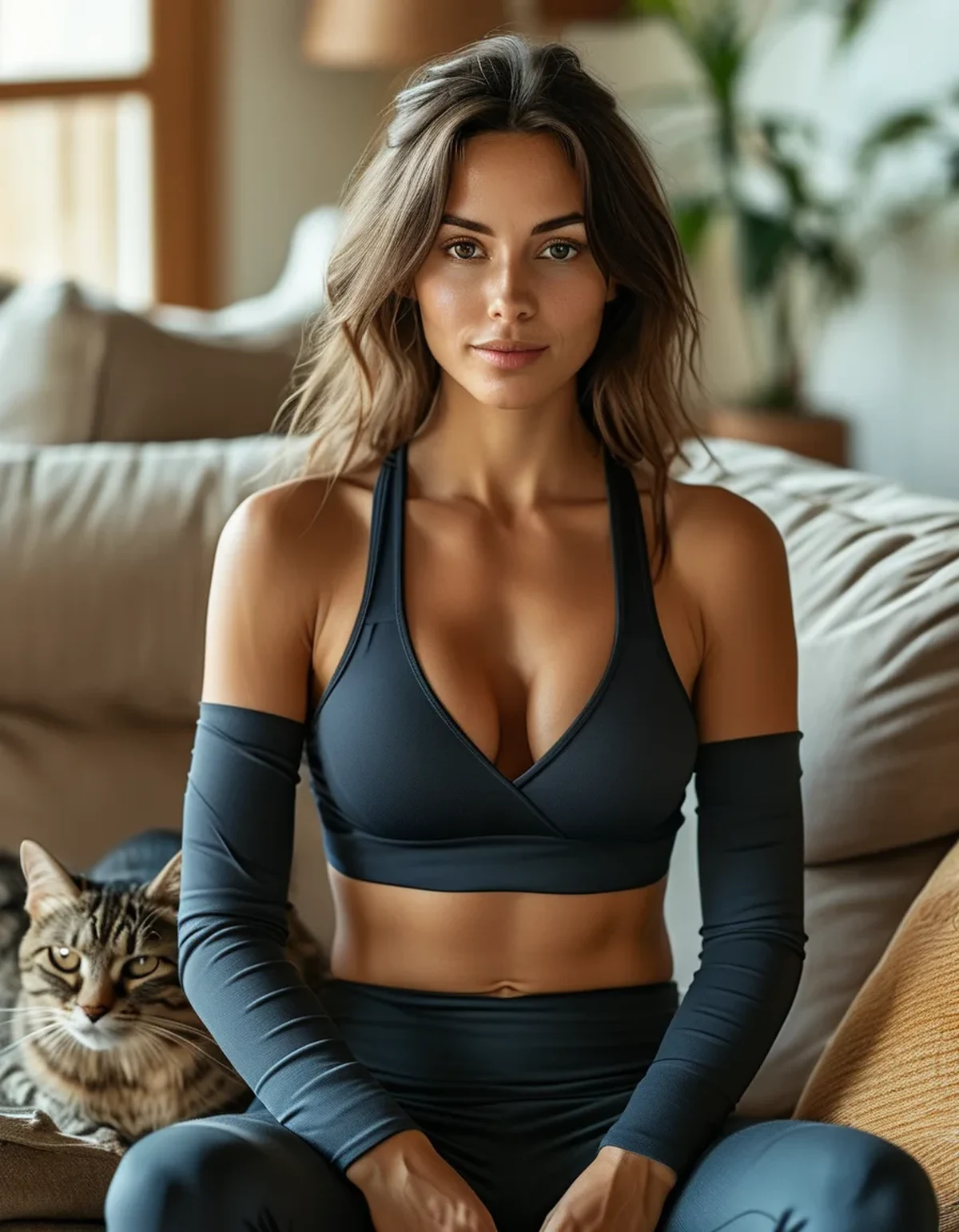
Seen here: High Waist Yoga Leggings with Side Pockets — shop it on bubblelime.com
Keep Reading
This article is for general informational and styling purposes only. Fit, sizing, and product availability may vary.